

Resting a clear aqua desk cube beside a sunny window looks great on day one, yet weeks later the glossy edges can turn amber or foggy. If you wonder why ice cube squishy turns yellow or cloudy over time, the two biggest culprits are ultraviolet sunlight oxidation and trapped skin oils or alcohol cleaner haze. While surface oil cloudiness washes off with cool mild soap, deep UV yellowing is permanent polymer aging that you can slow down with shaded storage.
Because clear cubes show off miniature interior details like suspended seashells and confetti, keeping their walls bright makes daily play better. Below, you will see how to tell washable film from permanent yellowing on our $9.99 Ocean Ice Cube Squishy, follow four proven clarity habits, and review household care safety from the U.S. EPA Safer Choice program.
Why Ice Cube Squishy Turns Yellow vs. Why It Looks Cloudy?
Direct answer: surface cloudiness usually comes from hand oils, cornstarch buildup, or lint and washes clear with cool soapy water. By contrast, true amber yellowing comes from ultraviolet light and heat slowly oxidizing soft clear walls from the outside in.
| Visual Change | Main Cause | Reversible? | Best Care Action |
|---|---|---|---|
| Milky Surface Film | Hand oils, lotion, or excess cornstarch | Yes, washes clear fast | Cool water plus mild dish soap and microfiber |
| Frosted White Haze | Alcohol wipes, acetone, or harsh scrubbing | No; permanent etching | Stop solvent use and store dry |
| Warm Amber Tint | Direct window sunlight or radiator heat | No; slow UV oxidation | Move to shaded desk tray or pouch |
| Grayish Dust Dullness | Loose backpack pockets and paper lint | Yes, rinses off easily | Rinse cool and store inside clean zip pouch |
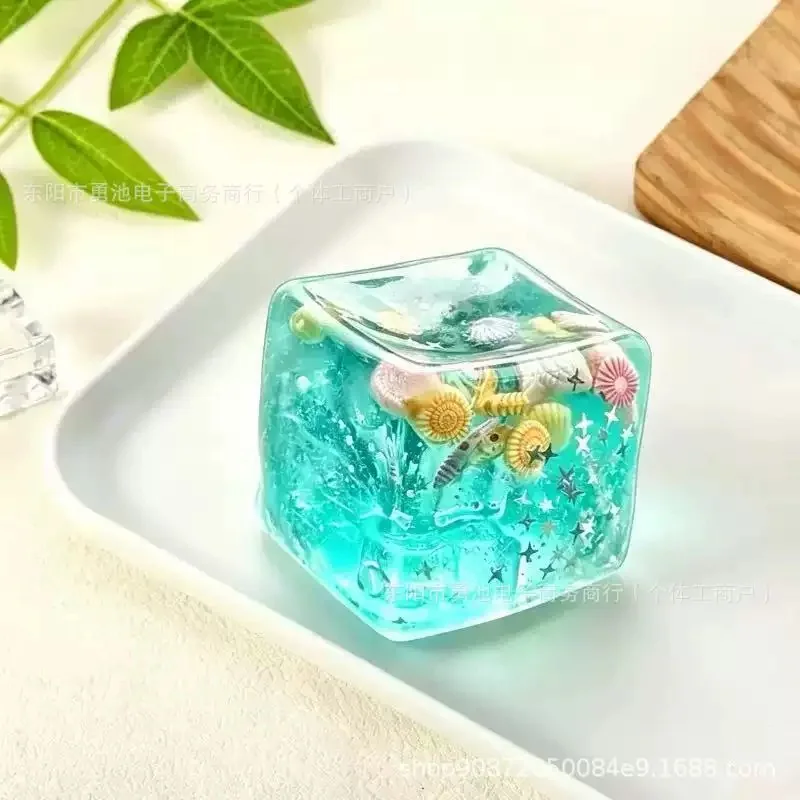
For example, a clear aqua Ocean Ice Cube Squishy holds miniature seashells, starfish, and sparkles inside its translucent walls. In practice, wiping off everyday skin oils once a week keeps those interior charms crisp and bright. However, leaving the same cube on a sunlit windowsill accelerates amber tinting that no soap can scrub away. For safe washing steps, read our clear ice cube squishy washing guide.
How Can You Slow Down Yellowing and Cloudiness on Clear Cubes?
Short answer: store cubes out of direct sunlight, wash hands before long squeezing sessions, skip alcohol-based sanitizers, and dry cubes with clean microfiber after rinsing. In practice, these four simple habits preserve crystal clarity across our Ocean, Swirl, and Glitter lineup.
- Keep clear cubes off sunny windowsills and car dashboards. Ultraviolet rays pass right through window glass and accelerate polymer yellowing even when the room feels cool. Slip your desk cube into a shaded drawer or covered tray whenever you finish studying.
- Wash hands before squeezing and skip lotion. Natural skin oils, sunscreen, and scented hand creams leave a hazy film that traps dust along glossy faces. Rinse your cube under cool tap water with mild unscented dish soap whenever it loses its glassy look.
- Never wipe clear cubes with isopropyl alcohol or bleach. Alcohol strips surface gloss and leaves permanent white fog; read our surface cracks and peeling guide to see how solvents also weaken edges.
- Use a whisper of plain cornstarch only when bone dry. If you dust a cube while damp, wet starch turns into chalky paste that looks cloudy. Our sticky squishy care guide covers mess-free light dusting.
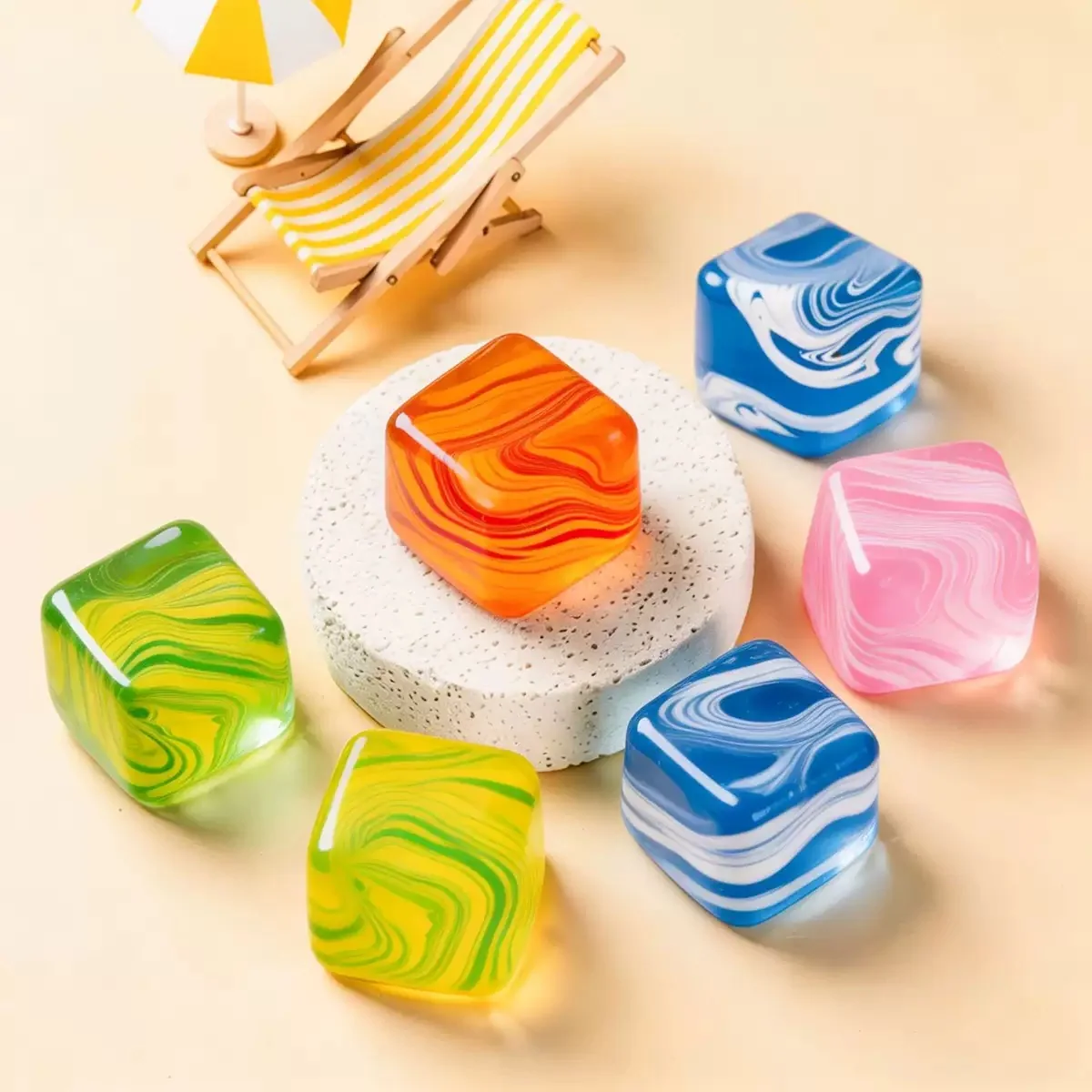
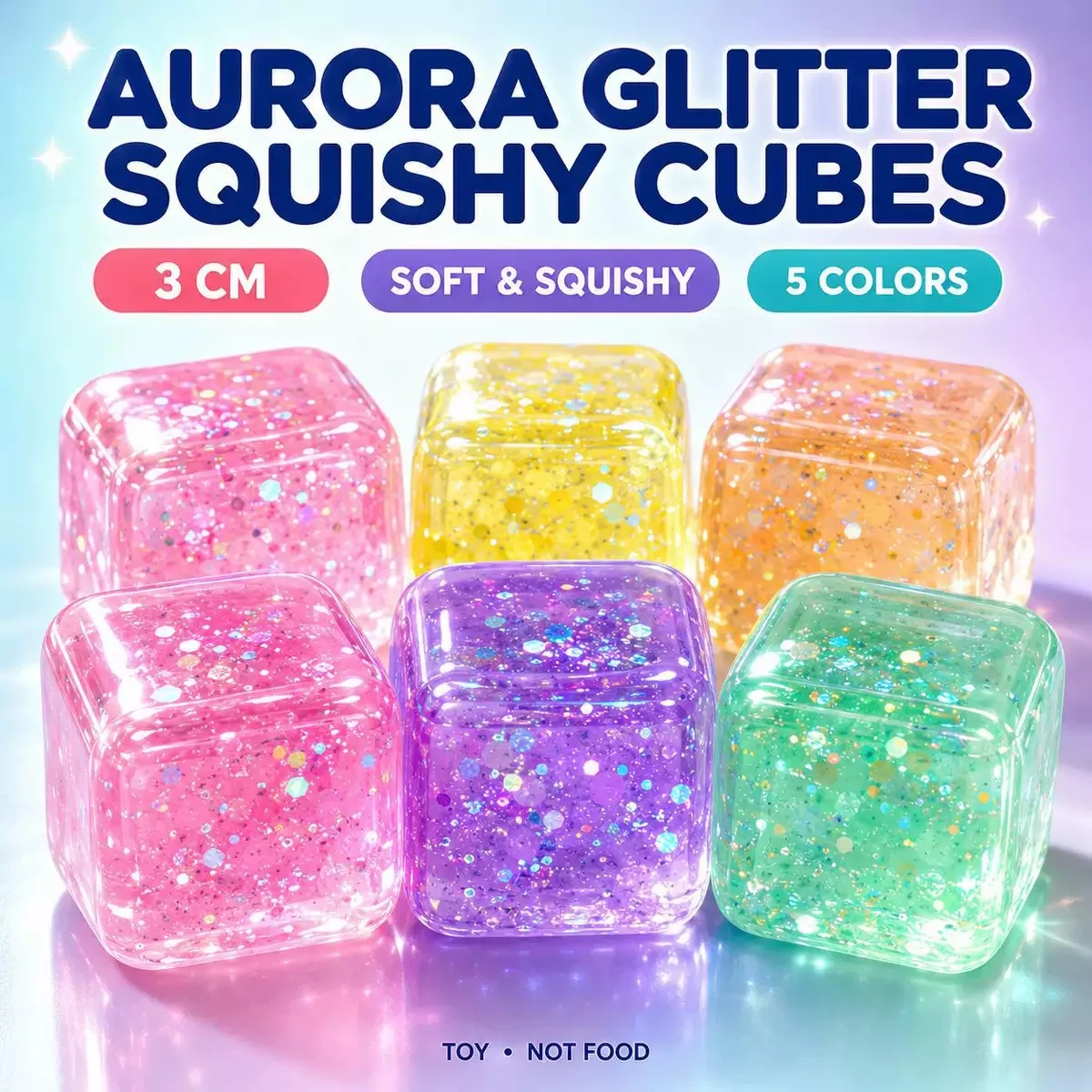
In practice, these four habits work just as well on our marbled Swirl Ice Cube Squishy and our compact 3 x 3 x 3 cm, 35 g Glitter Ice Cube Squishy. Understanding why ice cube squishy turns yellow under desk windows also helps collectors pick better display spots. For example, tucking a clear cube behind a monitor stand cuts direct ultraviolet exposure while keeping it within reach during study breaks.
Why Do Bleaching Hacks and Hydrogen Peroxide Fail on Yellowed Squishies?
Direct answer: peroxide sun-brightening tricks designed for hard retro video game shells ruin soft translucent toys. Mixing chemical oxidizers with direct UV rays leaves clear cube walls brittle, tacky, and ready to split.
- Hydrogen peroxide sun baths: Retrobrite-style peroxide soaks weaken soft elastomers and can cloud transparent walls worse than the original tint.
- Chlorine bleach dips: Household bleach degrades clear skins, leaves harsh odors, and creates skin irritation hazards around study desks.
- Baking soda scrubbing: Heavy dry scrubbing scratches glossy faces with micro-abrasions that scatter light into permanent frost.
- Acetone or nail polish remover: Solvents melt the clear outer sheen on contact.
According to the U.S. Consumer Product Safety Commission, keeping harsh chemical treatments away from squeeze toys prevents surface breakdown and unsafe residue. Likewise, HealthyChildren.org toy safety guidance advises regular inspection and retiring aged toys once soft walls turn brittle or cracked. In practice, skipping peroxide baths and bleach dips protects indoor air and keeps glossy surfaces smooth for daily squeezing.
When Is a Yellowed Cube Still Safe to Squeeze vs. Ready to Replace?
Short answer: mild cosmetic amber tinting on a smooth, flexible cube is still safe for everyday desk fidgeting, whereas brittle, sticky, or cracking yellowed walls mean it is time to retire the toy. Checking wall stretch during your weekly rinse makes that decision easy.
In practice, storing clean cubes inside a shaded pouch from our squishy storage guide adds months of bright clarity. You can also compare how clear aqua charms, marbled ribbons, and pastel confetti age on desks in our Ocean vs Swirl vs Glitter guide or clear squishy quiet desk guide.
Once an older cube loses its bright clarity or turns stiff, replacing it stays simple. A single Ocean Ice Cube Squishy sells for $9.99 USD in our Ice Cube Squishy shop, backed by a 30-day return guarantee. Multi-cube orders also unlock mix-and-match discounts and free standard shipping on larger bundles, letting you rotate fresh cubes while protecting each one from steady sun exposure.
Yellow and Cloudy Ice Cube Squishy Questions Answered
Why ice cube squishy turns yellow even inside a bedroom?
Ambient daylight through bedroom windows still carries ultraviolet rays that slowly tint translucent elastomers over months. In practice, keeping your cube inside a shaded desk dish or drawer away from direct sunbeams slows that tinting down.
Can cool soapy water fix a cloudy ice cube squishy right away?
Yes, if the cloudiness comes from skin oils, lotion, or pocket dust, cool water and mild liquid dish soap restore clear shine fast. For example, patting dry with lint-free microfiber removes water spots before they dry hazy.
Does colored desk lighting or LED lamps make clear cubes turn yellow?
Standard indoor LED desk lamps emit almost zero ultraviolet radiation compared to direct sunlight. Therefore, normal study lighting will not yellow a translucent cube the way a sunny windowsill does.
Should I throw away a slightly yellowed cube if it still feels soft?
No, light cosmetic yellowing alone does not mean a cube is broken. Keep enjoying it while the outer walls stay smooth and flexible, and retire it once cracks, leaks, or brittle edges appear.