


Standing in a craft aisle holding three glue tubes rarely makes fixing a nicked clear cube easier. The best glue for ice cube squishy hairline nicks is neutral-cure flexible clear silicone. Apply a thin film and cure it for 24 hours. By contrast, superglue, hot glue, white craft glue, and clear tape fail fast on smooth translucent walls.
Because clear jelly-soft cubes flex across all six faces on each squeeze, rigid glues snap and cloud clear walls fast. Below, we rank six common glues and patch methods side by side using fume guidance from the U.S. EPA Safer Choice program. You will also see when replacing a $9.99 Ocean Ice Cube Squishy beats buying glue.
What Is the Best Glue for Ice Cube Squishy Repair Across Six Methods?
Direct answer: neutral-cure flexible clear silicone is the only household adhesive that stays clear and rubbery on dry surface nicks. Other common glues either harden brittle, frost translucent walls, or release harsh fumes that weaken soft skins.
| Glue or Patch Method | Stays Flexible? | Dries Clear? | Verdict for Clear Cubes |
|---|---|---|---|
| Neutral-Cure Clear Silicone | Yes, soft rubbery bond | Yes, minimal haze | Best choice for dry shallow surface nicks |
| Industrial Craft Cement (E6000) | Medium flex | Slight yellowing | Skip for kids; strong solvent fumes |
| Clear Vinyl Pool Patch | Low stretch | Glossy edge line | Peels off curved corners after skin oils build up |
| Fabric or White Craft Glue | Soft on foam only | Turns milky white | Fails on non-porous clear skins |
| Cyanoacrylate Superglue | No, glass-hard crust | Chalky white bloom | Never use; slices soft walls deeper |
| Hot Glue Gun | Thick rubbery lump | Cloudy thick bead | Never use; nozzle heat melts thin walls |
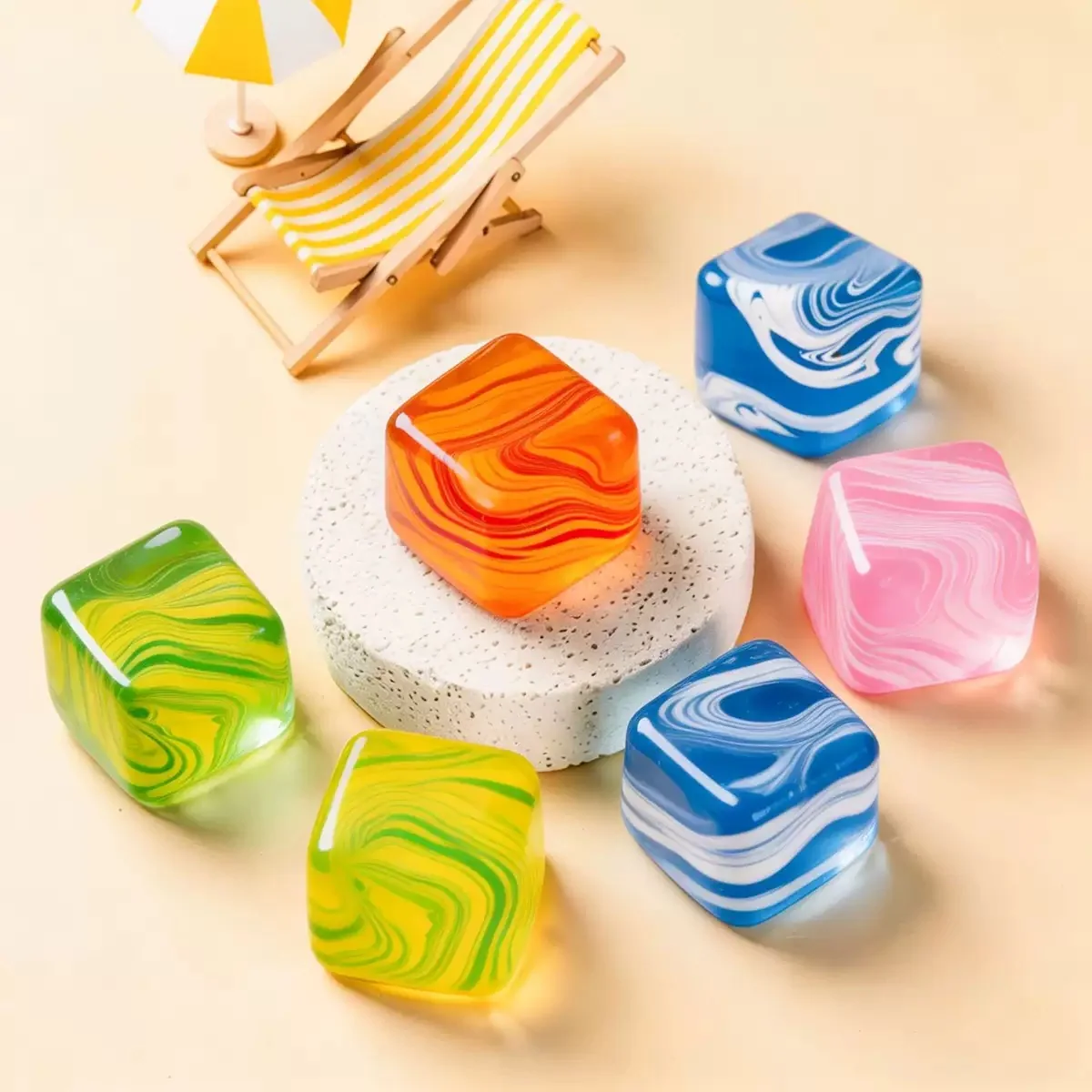
For example, foam repair videos often praise fabric glue because porous bakery foam soaks up liquid glue like a sponge. However, translucent cubes like our Swirl Ice Cube Squishy have smooth, non-porous walls that repel water-based craft glues. In practice, white fabric glue beads up on a glossy face and peels off in a rubbery sheet after the first squeeze. If you want to compare foam and clear cube structures closely, read our jelly cube vs slow-rising foam guide.
Why Does Flexible Clear Silicone Beat Rigid Craft Adhesives?
Short answer: neutral-cure flexible silicone stretches alongside soft clear walls after a 24-hour cure instead of snapping into a sharp plastic ridge. For example, a toothpick micro-dot stays pliable across dozens of gentle desk presses. Because a patched edge bends during palm presses, matching flexibility keeps the seam from cutting nearby skin.
Even when you pick the best glue for ice cube squishy nicks, preparation decides whether the bond holds for weeks or peels off in an hour. Wash off hand oils with cool mild soapy water first, as explained in our clear ice cube squishy washing guide. Next, blot dry with a clean microfiber cloth and let the cube air-dry for 30 minutes so zero water hides inside the nick. Dab a pinpoint dot with a wooden toothpick, then cure untouched for 24 hours in a breezy room.
After curing, brush a light dusting of plain cornstarch over the seam to stop pocket lint from sticking. For ongoing surface tack, follow our sticky squishy care guide. In practice, switching any patched cube to gentle flat-palm presses keeps stress off the cured seam. Pinching a repaired corner between your thumb and index finger concentrates force along the weakest line and reopens the slit.
Why Do Tape, Vinyl Patches, and Solvent Glues Fail on Clear Cubes?
Direct answer: skin oils lift tape and vinyl patches off curved corners fast. Meanwhile, solvent cements emit strong fumes and craze translucent walls. In practice, avoiding all four shortcuts saves a $9.99 desk cube from permanent haze. Avoiding these shortcuts protects both your desk cube and indoor air quality.
- Clear packing tape or Band-Aids: Natural hand oils creep under adhesive edges during normal squeezing, leaving a gummy strip that traps pocket fuzz.
- Vinyl pool repair patches: Flat vinyl sheets work on wide air mattresses, yet they buckle on small curved desk cubes and leave sharp corners that snag fingers.
- Heavy solvent cements: Strong industrial glues require outdoor ventilation and protective gloves, making them a poor match for bedroom or study-desk toys.
- Superglue and nail polish: Both dry rigid and leave frosted white streaks across clear aqua or pastel confetti windows.
According to the U.S. Consumer Product Safety Commission, soft toys should remain intact without sharp cured lumps or loose decorative parts. Likewise, HealthyChildren.org toy safety guidance urges parents to discard damaged toys rather than relying on makeshift household repairs around young children.
When Should You Skip Glue and Replace a Damaged Ice Cube Squishy?
Short answer: skip glue if inner gel leaks out or if miniature charms shift inside a split. Also replace the cube if specialty silicone costs nearly the same. Knowing when to stop patching keeps desk play safe and mess-free.
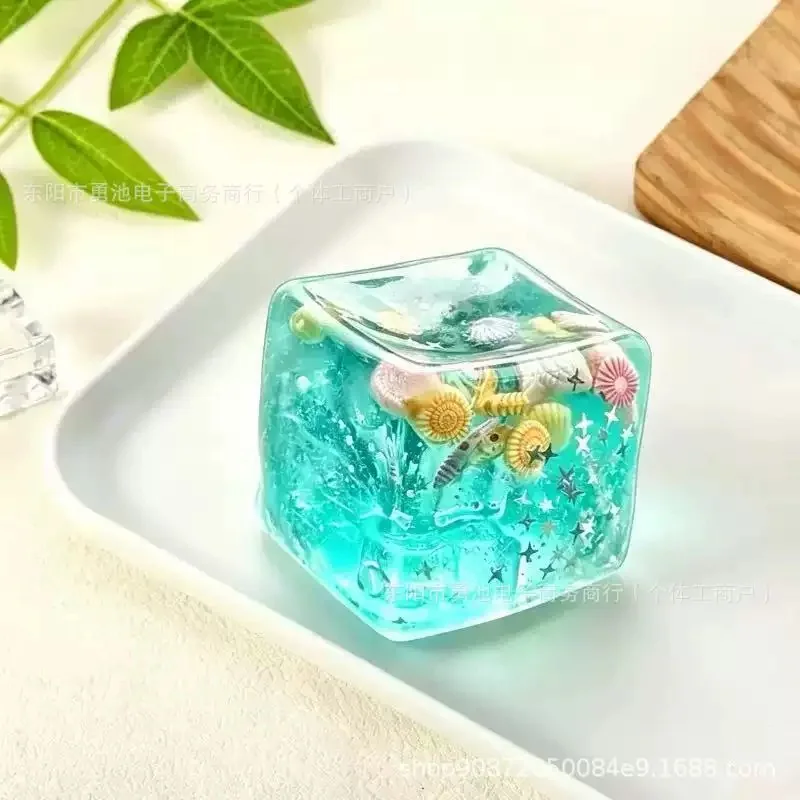
For example, inside the clear aqua Ocean Ice Cube Squishy ($9.99 USD), miniature seashells, starfish, and fine sparkles sit sealed inside translucent walls. In practice, once a deep tear opens, no glue can seal those charms back safely. Once a deep tear lets core gel escape or exposes those miniature charms, no glue can rebuild a waterproof factory seam. For full tear triage steps, see our ripped ice cube squishy repair guide or our surface cracks and peeling guide.
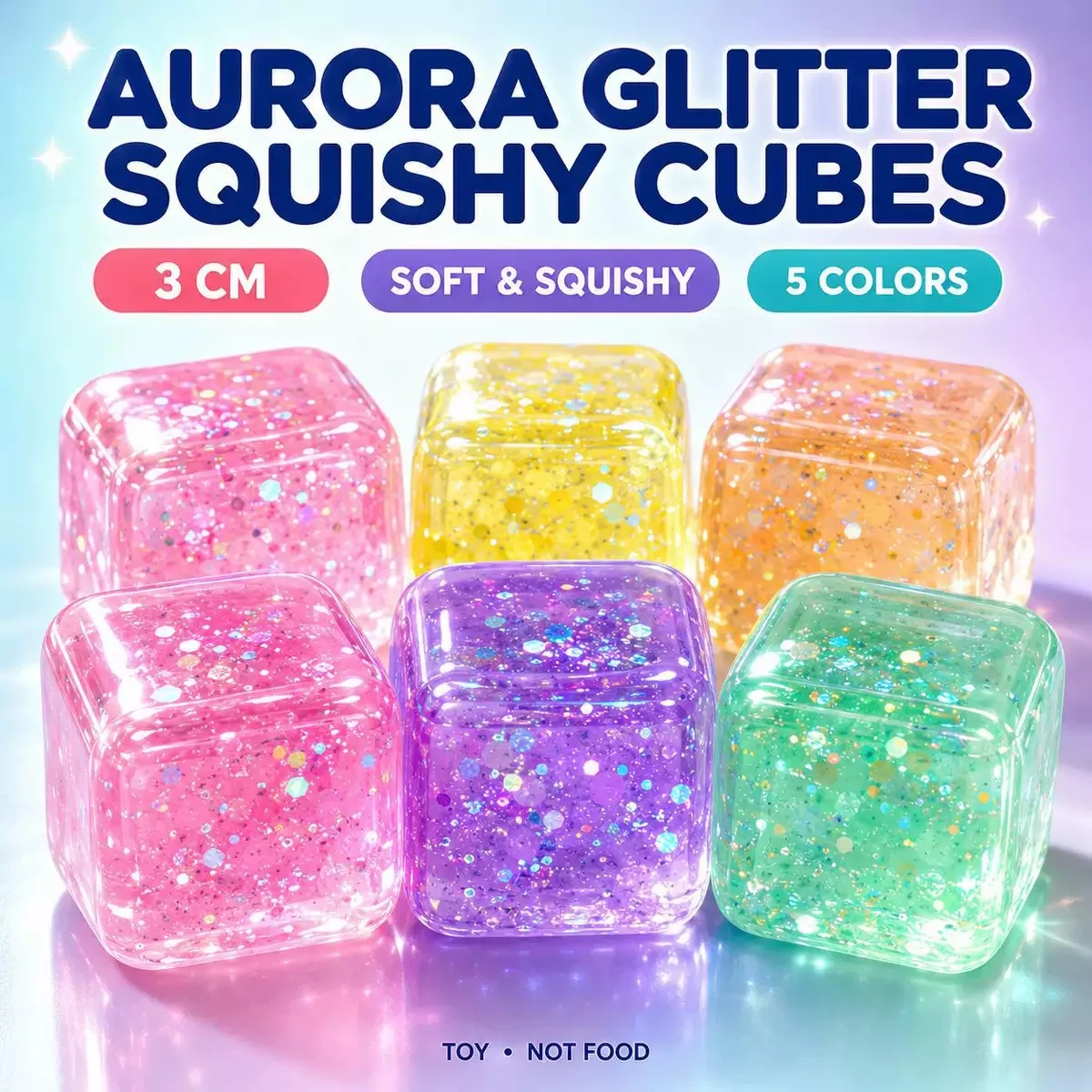
Before purchasing a specialty glue tube, compare the replacement cost. A single Ocean Ice Cube Squishy sells for $9.99 USD in our Ice Cube Squishy shop, alongside our marbled Swirl cube and compact Glitter Ice Cube Squishy. Multi-cube orders unlock mix-and-match savings and free standard shipping on larger bundles. Every order carries a 30-day return guarantee. Replacing a worn cube also spares you from buying specialty silicone you may only open once. Storing fresh cubes in a clean pouch from our squishy storage guide also prevents backpack snags before you ever need glue. You can compare all three styles in our Ocean vs Swirl vs Glitter guide.
Ice Cube Squishy Glue and Patch Questions Answered
Is E6000 the best glue for ice cube squishy seams?
No, E6000 is not ideal for desk squishies despite its flexible hold. It releases strong solvent fumes during curing and can cloud clear walls. Neutral-cure flexible clear silicone is cleaner for adult desk repairs.
Can UV resin fix a cracked clear ice cube squishy?
In practice, UV craft resin cures into hard acrylic glass, not soft rubber. For example, the first palm press snaps the rigid plate off the cube. The moment you squeeze a UV-resin patch on a soft cube, the rigid plate snaps away and leaves sharp edges.
Will silicone sealant stop a leaking gel core from oozing?
No, wet gel prevents flexible silicone from curing against the outer skin even after 24 hours. Once inner gel leaks through a split, seal the broken cube in a tied trash bag and discard it.
How long should you wait after gluing a hairline nick before squeezing?
Let the cube rest a full 24 hours in a dry, shaded room before squeezing it. Testing the seam early stretches uncured silicone and pulls the hairline nick right back open.