

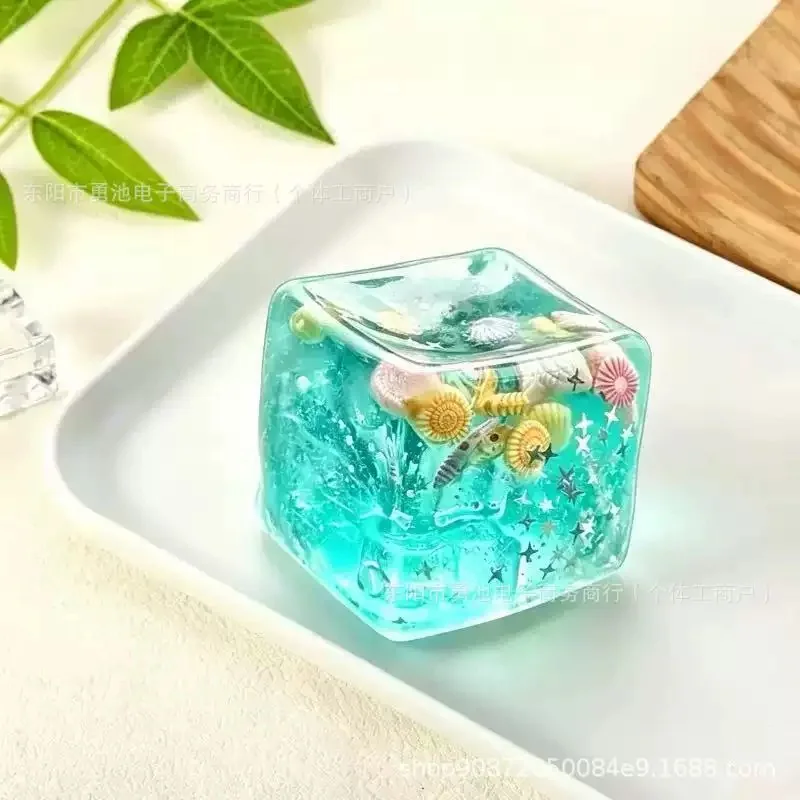
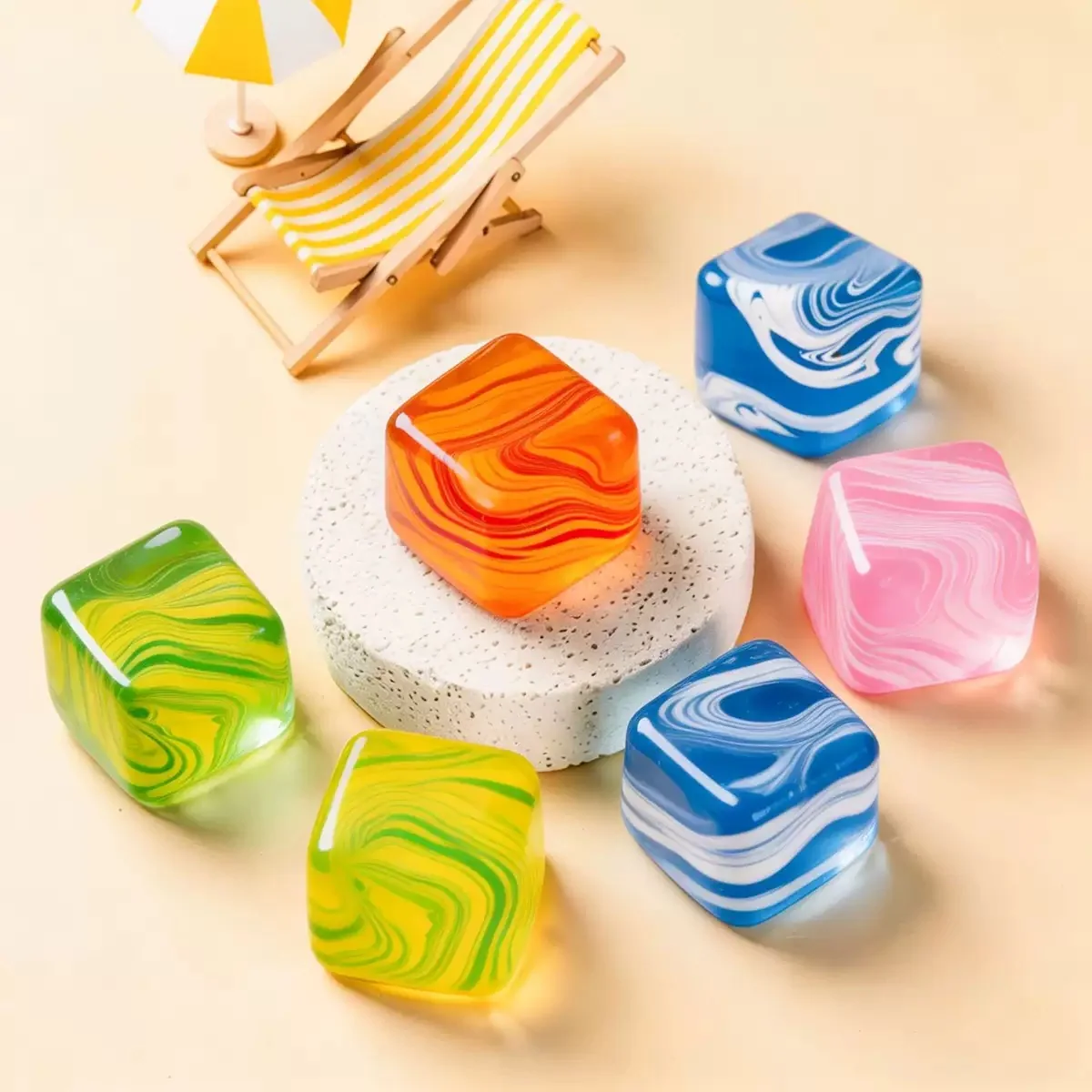
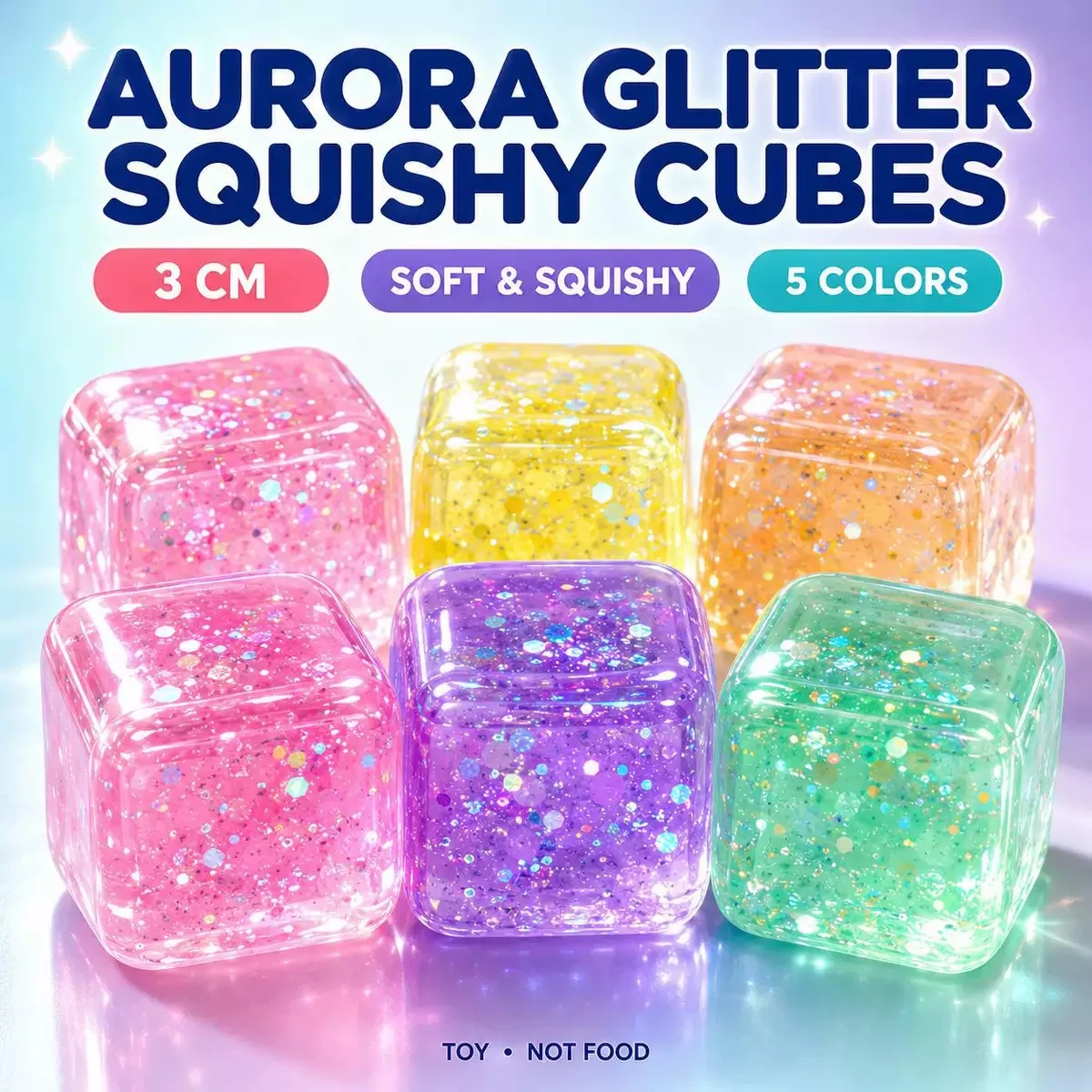
Fine hairline marks along the glossy edge of a clear desk cube can appear right after a busy week of squeezing. If you want to repair cracks on ice cube squishy walls and slow early peeling, stop using hand sanitizer or alcohol wipes immediately. Wash the cube in cool mild soapy water and let it air-dry for 30 minutes. Next, seal dry shallow creases with a pinpoint coat of flexible clear silicone and cure 24 hours.
Because surface crazing starts on the outer finish rather than deep inside, catching dryness early extends a cube’s desk life without harsh chemicals. Below, you will see why glossy skins crack and how to stabilize marks on a marbled Swirl Ice Cube Squishy. You will also learn when to retire flaking toys under U.S. Consumer Product Safety Commission guidance.
Why Do Surface Cracks and Peeling Form on Clear Cubes?
Direct answer: glossy clear walls crack when solvents, sunlight, or sharp corner pinching strip flexibility. Catching dryness early stops those lines from deepening. Unlike painted bakery foam that flakes along dry paint lines, translucent cubes craze along bent edges first.
| Surface Symptom | Main Trigger | Can You Stabilize It? | Best Care Response |
|---|---|---|---|
| Faint Glossy Crazing | Alcohol wipes or dry desk friction | Yes, prevent further spread | Switch to cool mild soap and dry microfiber cloth |
| Shallow Dry Edge Crease | Repeated thumbnail corner pinching | Sometimes, light palm use | Cool wash, full air dry, micro-layer flexible clear silicone |
| Active Peeling or Flaking | Long UV exposure or chemical damage | No; unsafe for heavy use | Retire and discard before loose flakes detach |
For example, wiping a marbled Swirl Ice Cube Squishy with isopropyl alcohol after a commute dries the glossy finish fast. Over time, that dried skin forms fine stress lines along the lime green, pink, orange, or blue swirl corners. By contrast, washing with cool water and a single drop of mild dish soap keeps the outer wall supple. If your cube looks cloudy alongside light crazing, review our clear ice cube squishy washing guide.
How to Repair Cracks on Ice Cube Squishy Surfaces in Four Steps?
Short answer: wash off skin oils without alcohol and dry for 30 minutes. Next, bridge dry shallow creases with flexible clear silicone and cure untouched for 24 hours. Never pick at lifted edges with your fingernails, because tugging one loose flap pulls up the surrounding gloss.
- Rinse under cool soapy water. Use cool tap water and mild liquid dish soap to wash away skin oils, dust, and sanitizer residue. Avoid hot water or rough scrub pads that scuff smooth translucent faces.
- Blot dry with microfiber and rest 30 minutes. Press all six faces against a clean microfiber cloth. Then leave the cube on a shaded tray for 30 minutes. Hidden moisture inside a surface crease ruins silicone adhesion.
- Trace dry creases with a toothpick. Place a small dot of flexible clear silicone on a wooden toothpick. Glide a paper-thin coat along the shallow crease. Keep the bead flat so the cured seam never creates a stiff lump.
- Cure 24 hours and dust with cornstarch. Leave the cube untouched on parchment paper away from windows and heaters for 24 hours until the silicone cures rubbery. Finish with a light brush of plain unscented cornstarch to calm tackiness. Our sticky squishy care guide explains why plain starch beats scented powders.
In practice, switching to flat-palm squeezing after a 24-hour cure doubles how long a stabilized crease stays tidy. Folding a translucent cube in half concentrates tension right across the center seam and opens new micro-cracks. If you are dealing with a deeper open split rather than surface crazing, check our ripped ice cube squishy repair guide.
Which Household Coatings Make Peeling Squishy Skins Worse?
Direct answer: skip clear nail polish, craft varnish, hairspray, and 70% isopropyl alcohol wipes when trying to repair cracks on ice cube squishy walls. Each of those coatings either weakens soft clear skins or dries into a stiff shell that chips off during squeezing.
- Clear nail polish: Solvent vapors soften translucent surfaces at first, then cure into a rigid glassy film that shatters on the first squeeze.
- Isopropyl alcohol and sanitizing wipes: Alcohol strips surface gloss and accelerates edge cracking, especially on clear cubes kept beside keyboards.
- Craft varnish or white school glue: Water-based craft glues turn milky white on contact with hand sweat and peel away in gummy strips.
- Mineral oil or hand cream: Oils seep into stressed creases, making peeling flaps slip and tear wider.
In practice, the U.S. EPA Safer Choice program shows why mild, fragrance-free soap and cool water beat harsh solvents indoors. For example, skipping alcohol wipes cuts surface drying while keeping study desks free of chemical fumes. Meanwhile, HealthyChildren.org toy safety guidance recommends regular surface checks. Toss any toy whose finish flakes or sheds fragments.
When Should You Retire a Peeling Cube and Replace It?
Short answer: discard any cube with active peeling flakes, deep splits, or exposed charms. No household coating restores factory gloss once walls shed. Keeping shedding toys away from young children and pets always comes first.
If you own a charm-filled Ocean Ice Cube Squishy or our compact 3 x 3 x 3 cm, 35 g Glitter Ice Cube Squishy, check every corner whenever you wash them. Checking edges under a desk lamp catches early crazing before seams open. Preventing surface stress is easier than repairing it. Keep cubes off dark ink, store them in a shaded pouch from our squishy storage guide, and let hand sanitizer dry before squeezing. You can also compare daily desk textures across styles in our Ocean vs Swirl vs Glitter guide or our Swirl Ice Cube Squishy buyer guide.
Once a worn cube starts shedding, replacing it costs less than buying specialty craft coatings. A single Swirl Ice Cube Squishy sells for $9.99 USD in our Ice Cube Squishy shop with a 30-day return guarantee. Multi-cube orders unlock mix-and-match discounts, and larger bundles qualify for free standard shipping. Choosing a fresh translucent cube also restores the smooth, glossy bounce that surface crazing takes away.
Ice Cube Squishy Crack and Peeling Questions Answered
How to repair cracks on ice cube squishy edges if they feel tacky?
Wash the cube with cool mild soapy water, pat dry with microfiber, air-dry for 30 minutes, and dust lightly with plain cornstarch once bone dry. If the crease stays shallow and dry, a thin flexible silicone touch-up can help slow wear.
Why did my glossy cube start peeling after I used hand sanitizer?
Alcohol in 60% to 70% hand sanitizer dries out smooth translucent skins and weakens surface gloss. Always let sanitizer dry on your hands before squeezing, and rinse the cube with plain cool water afterward.
Can clear tape stop surface peeling from spreading?
Packing tape or office tape never bonds reliably to flexible clear cubes. Skin oils loosen tape edges fast, and pulling tape off later often lifts away even more glossy finish.
Does a small glossy scuff mean my cube is about to leak?
Not always, because light matte scuffs from desk trays sit only on the outer finish. However, if a crease deepens when pressed flat or feels wet inside, retire the cube right away.