

One swipe with an office alcohol wipe can haze a glossy squeeze toy in ten seconds flat. Shoppers looking for a tpr squishy care guide often spot surface damage only after using desk sanitizers. Across the wider fidget market, soft thermoplastic rubber toys follow the same gentle habits as clear cubes like Swirl Ice Cube Squishy and Ocean Ice Cube Squishy. Both clear cubes sell individually at $9.99 USD and stay bright under solvent-free care.
Knowing how soft exteriors react to solvents, heat, and dark ink keeps a favorite desk toy clear for months. In addition, regular toy safety checks help families tell when to wash a cube versus when to replace it.
What Is TPR in a Squishy, and Why Does It Need Careful Handling?
In the retail toy market, TPR stands for thermoplastic rubber, a flexible polymer family that stretches like rubber and molds like plastic. According to the Wikipedia overview of thermoplastic elastomers, these blends deliver elastic rebound with smooth skins without vulcanization. Because factories tune softness differently across brands, a tpr squishy can feel bouncy and dry or soft and jelly-like.
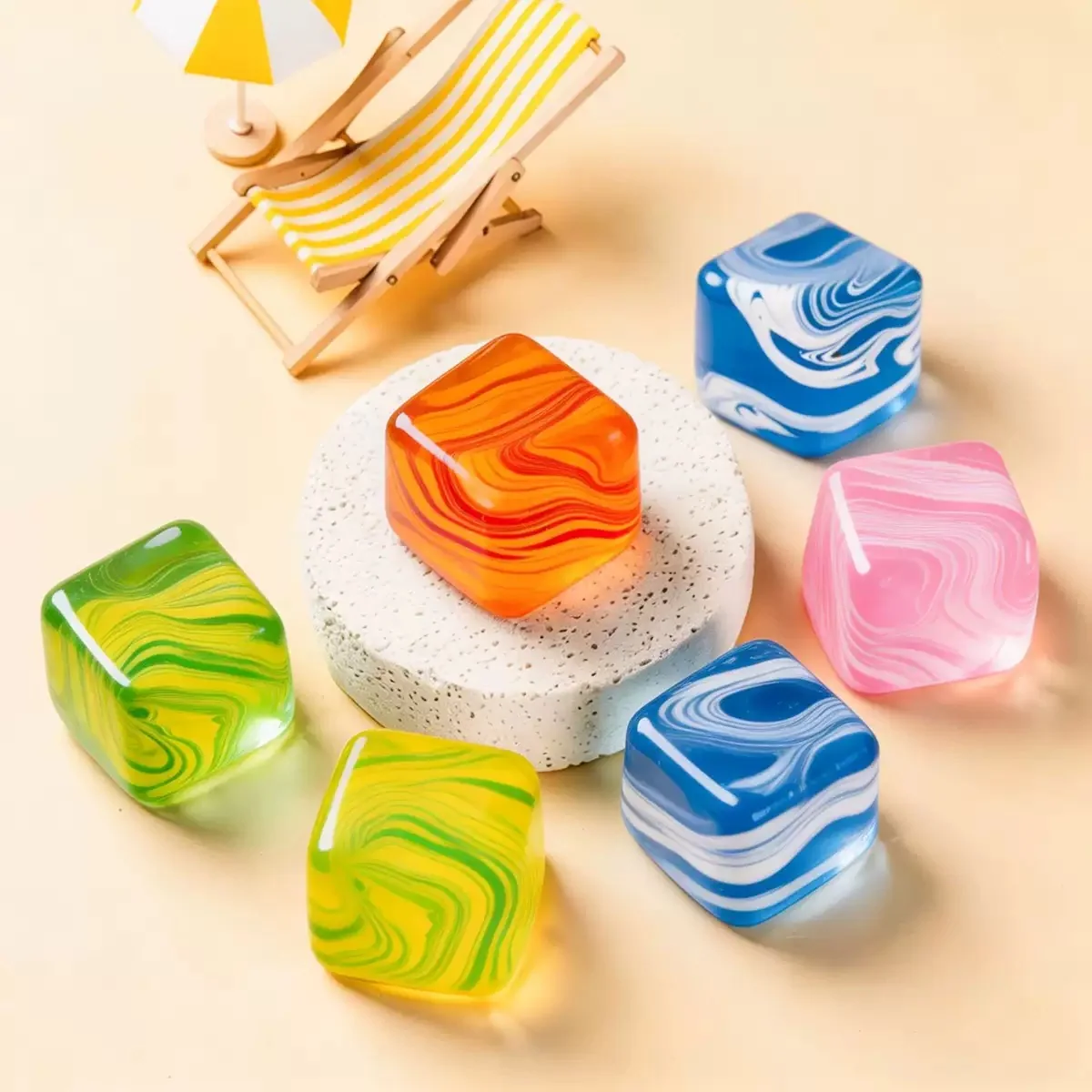
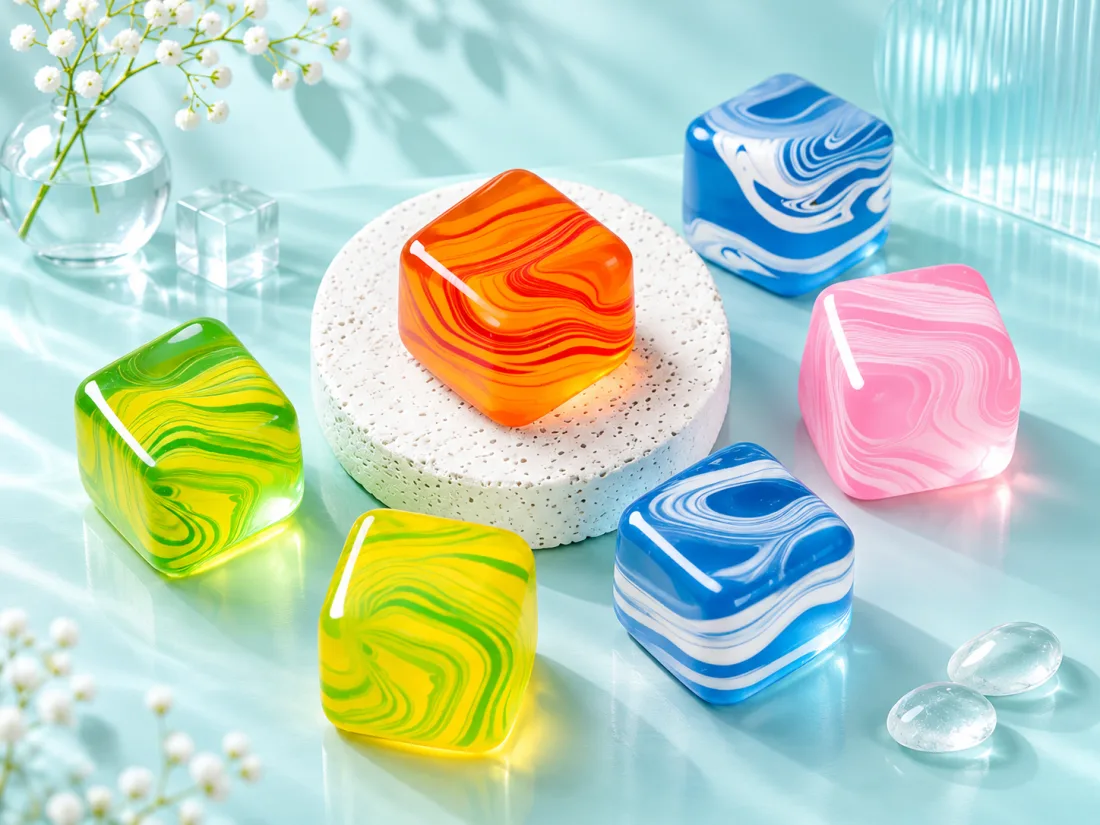
In practice, soft polymer skins react faster to everyday desk hazards than rigid plastic blocks do. Oils from hand cream, dark ink from store receipts, and harsh alcohols mark smooth exteriors fast. For example, Swirl Ice Cube Squishy holds marbled color ribbons in lime green, pink, orange, or blue inside a glossy clear cube. Keeping that shell off dark newsprint and printer ink preserves its bright marbled swirls.
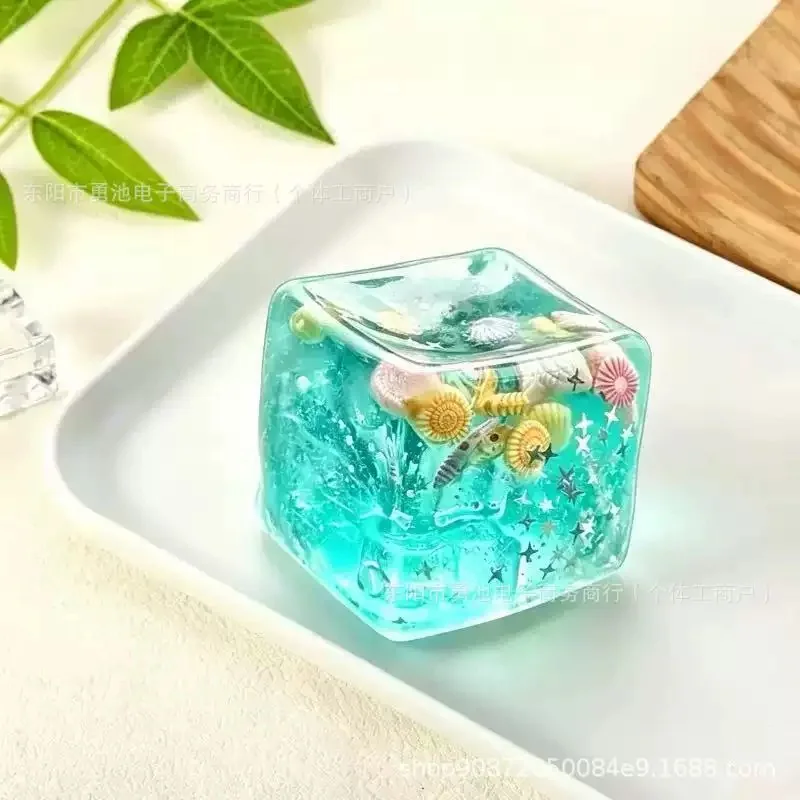
Meanwhile, Ocean Ice Cube Squishy pairs a clear aqua body with sparkles, starfish, and miniature seashells. Although both styles arrive crystal clear, skipping mild soap rinses lets hand oils dull the finish within weeks. Even parking a soft block beside a hot coffee mug or sunny window frame speeds up dust pickup across a single workweek.
Which Cleaning Mistakes Ruin a TPR Squishy or Glossy Cube Fastest?
Harsh solvents, hot water, and printed paper ink are the top three hazards that ruin soft fidget exteriors fast. For example, a ten-second wipe with 70% isopropyl alcohol can cloud a glossy shell for good. In a Reddit thread asking whether durable squishy fidget toys exist, longtime buyers noted that rough cleaners and heavy pulling tear toys sooner than daily pinching. Before checking the care chart below, remember that every design in the IceCubeSquishy catalog sells individually.
| Common Care Mistake | What Happens to Soft Shells | Safer Desk Alternative |
|---|---|---|
| Wiping with isopropyl alcohol | Clouds glossy finishes and dries out soft exteriors | Rinse under cool tap water with mild hand soap |
| Resting on printed newsprint or receipts | Pulls dark ink pigments into translucent surfaces | Park on a glazed ceramic coaster or acrylic dish |
| Scrubbing with hot water or dish sponges | Warps smooth finishes and leaves micro-scratches | Rub lightly with clean fingertips in cool water |
| Drying on fuzzy bath towels | Traps stubborn cotton lint across every face | Blot dry on a lint-free microfiber cloth and air-dry |
Because clear shells reveal smudges faster than opaque foam toys, skipping isopropyl alcohol is essential. Even a quick swipe of hand sanitizer gel can leave a cloudy film that plain water will not lift. Storing desk sprays on a separate shelf stops accidental splashes during Friday cleanups.
How Do You Wash and Refresh Swirl and Ocean Cubes Without Damage?
A cool-water soap rinse paired with full lint-free air drying is the safest way to refresh a tpr squishy or clear desk cube. Plain mild liquid soap lifts skin oils without harming optical clarity.
Follow these four practical steps whenever dust or lotion builds up:
- Hold the cube under cool tap water and add a single drop of plain, mild liquid hand soap.
- Rub all six faces with clean fingertips for twenty seconds to lift dust and skin oils.
- Rinse every trace of soap away under cool water, then blot dry on a lint-free microfiber cloth.
- Let the cube air-dry until bone dry; for Ocean Ice Cube Squishy, dust a light pinch of cornstarch if tackiness stays.
In practice, waiting until the shell feels bone dry before dusting cornstarch stops clumpy paste along cube edges. Also, tucking clean cubes into a smooth zip pouch keeps pocket fibers away during travel. Between washes, wiping your desk coaster once a week removes stray pencil graphite and crumbs before they transfer back onto the block. Setting a clean microfiber square inside your top drawer makes this quick 30-second rinse easy to repeat every Friday.
If you carry your cube inside a backpack or purse, avoid tossing it loose beside ballpoint pens, lip balm tubes, or keychains. Smooth silicone cases or rigid mint tins block sharp metal edges and keep lint off the glossy shell.
When Should Families Inspect and Replace a Worn Squishy?
Quick weekly checks show when a soft toy should be retired, especially around young children. According to U.S. Consumer Product Safety Commission toy safety guidance, parents should inspect small novelty toys for splits, tears, or loose charms. Discard damaged pieces right away. Skip trying to patch a torn fidget with household glue, because hard adhesives crack under pressure and leave sharp edges.
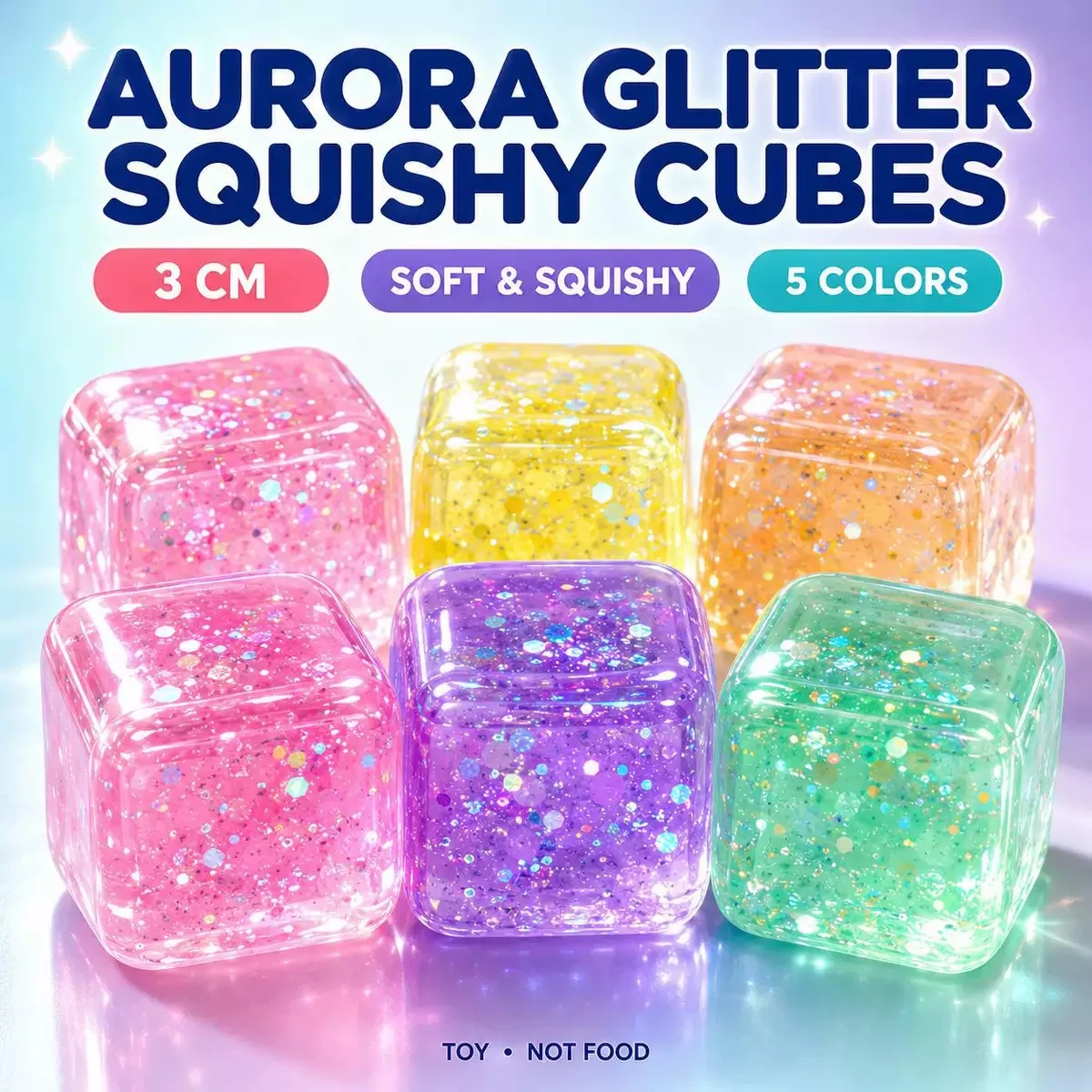
When you need a fresh replacement, single-unit pricing at $9.99 USD lets you order one cube without buying a giant set. Pairing two units applies 3% off, while six mix-and-match cubes unlock 10% off ($53.94 USD total) plus free standard shipping above $49. Tracked global delivery runs 8 to 14 business days, backed by a 30-day return guarantee through [email protected]. Keeping one spare cube tucked in a clean drawer makes weekly wash rotations simple for busy desks and classrooms. You can also mix Swirl, Ocean, and Glitter cubes inside one order to refresh multiple family desks at once.
TPR Squishy Safety, Material, and Cleaning Questions
Is TPR safe for squishies and kids?
Across regulated markets, children’s toys must meet safety rules overseen by agencies like the CPSC, covering small-part checks and material standards. In practice, parents should follow age labels, keep compact squishies away from toddlers who chew toys, and discard split pieces right away.
What is soft TPR material compared with polyurethane foam?
Soft TPR is a flexible, rubber-like elastomer with a smooth, solid-feeling bounce, while polyurethane foam is an airy sponge that rebounds after compression. For example, smooth gel-style exteriors wash clean in cool soapy water, whereas open-cell foam traps water inside.
Why should you never use isopropyl alcohol on glossy translucent cubes?
Isopropyl alcohol works as a strong solvent that can cloud, dry out, or weaken glossy clear exteriors. In practice, cool tap water and mild liquid hand soap lift oils without hazing marbled ribbons or aqua finishes.
Can household glue fix a torn squishy toy safely?
No, rigid glues dry into brittle seams that snap open as soon as you squeeze the block again. In practice, replacing a split piece with a fresh single cube is safer and cleaner than chemical glue repairs.