

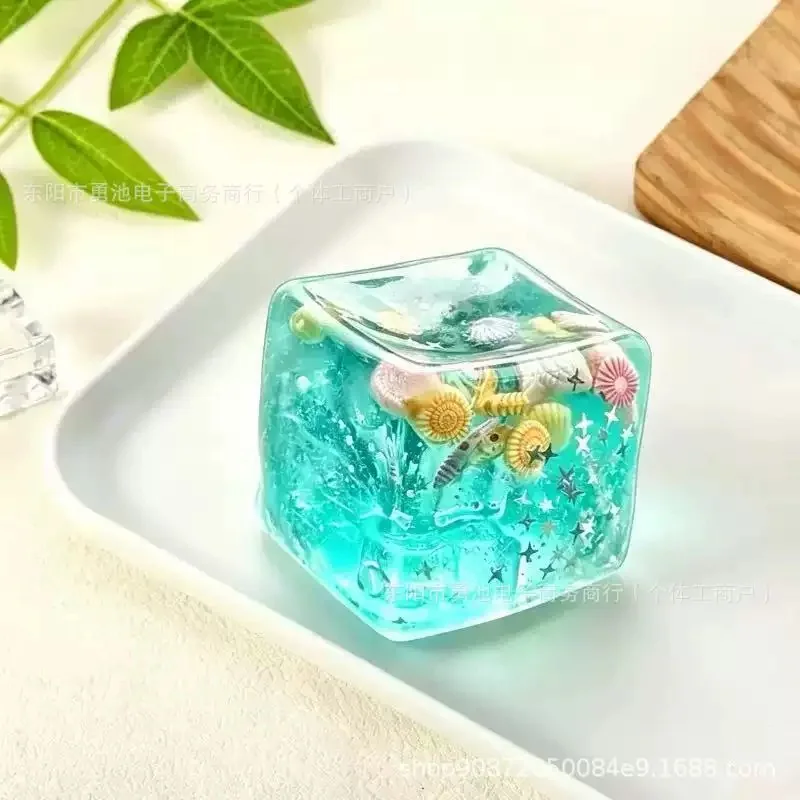
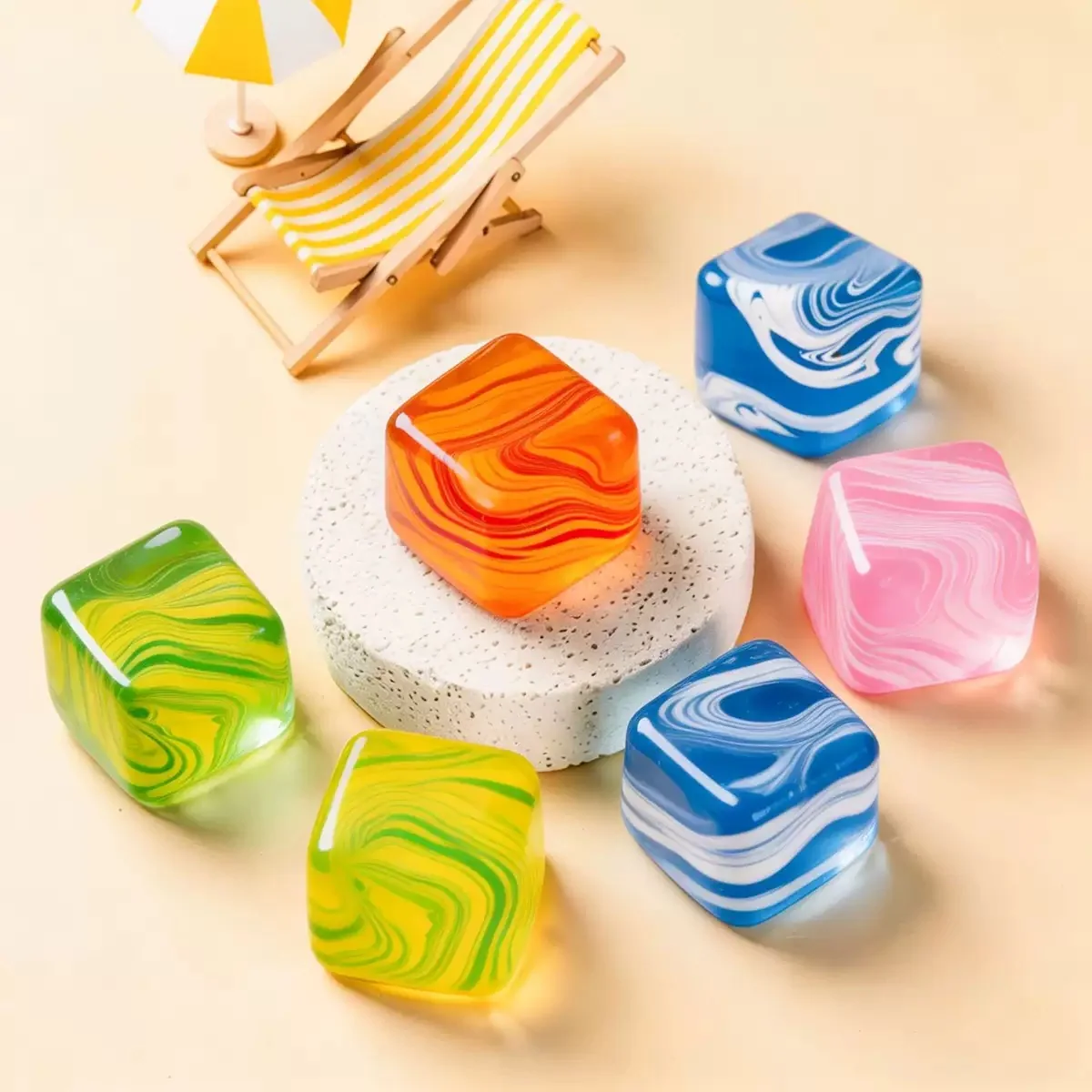
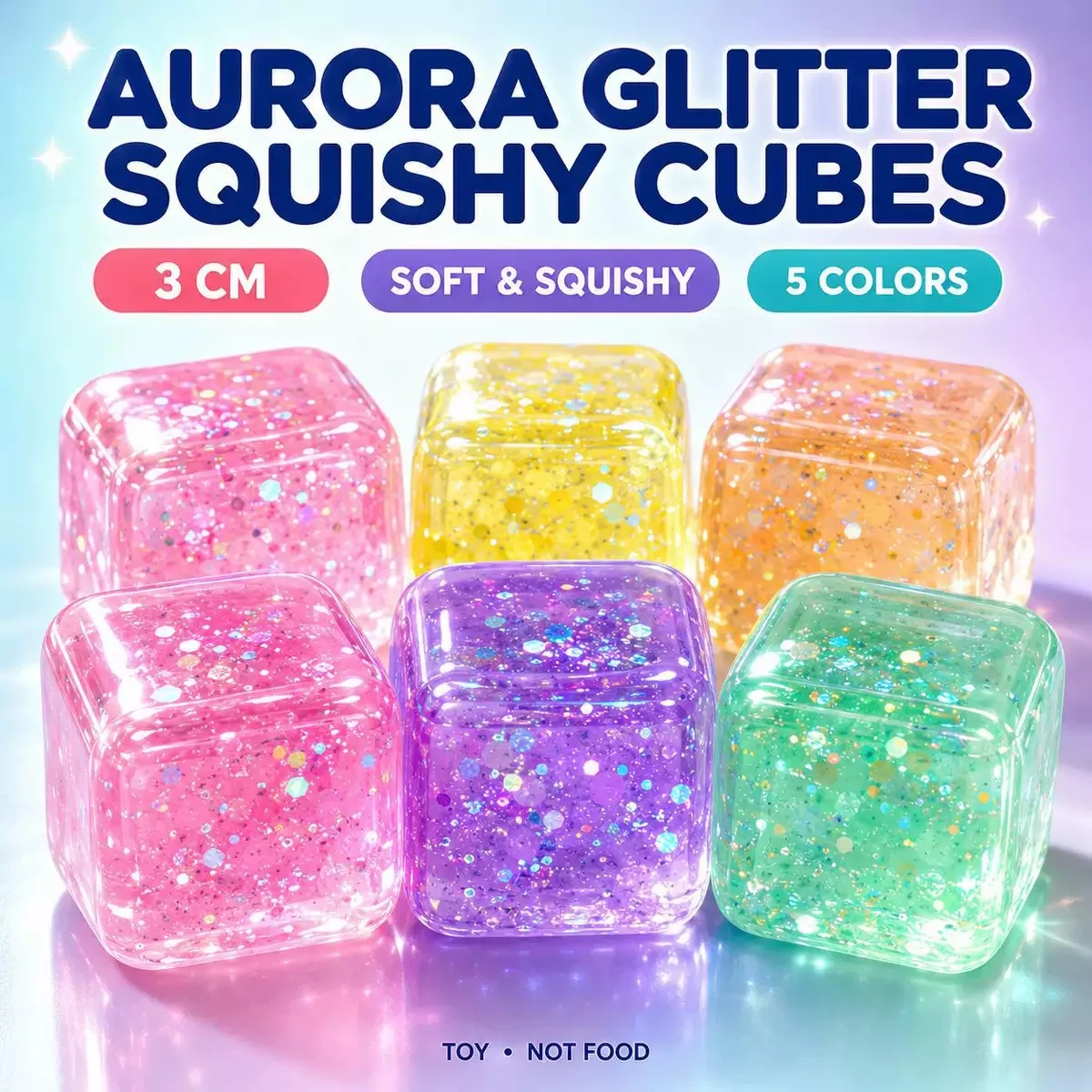
Press a foam bakery bun between your palms, and trapped air hisses out before the painted sponge puffs back. Press a clear aqua block instead, and the cool core yields in silence. Shoppers hunting for a slow rising squishy soon meet two distinct toy worlds: airy polyurethane foam charms and sealed translucent cubes like the $9.99 USD Ocean Ice Cube Squishy.
How Does a Slow Rising Squishy Differ From a Clear Jelly Cube?
A classic slow rising squishy is an open-cell foam toy that vents air under pressure and refills gradually once you open your fingers. By contrast, a clear desk cube holds a dense, jelly-soft core inside a smooth outer shell that rebounds without spongy crinkles. In a Reddit brand thread on slow-rise toys, collectors separated foam lines like collectible foam squishy or collectible foam squishy from heavier gel stress cubes.
For example, that build difference shapes how each toy ages across a busy workweek. Foam shapes feel airy at first, yet painted skins can crease or flake along tight corners after heavy squeezing. Meanwhile, a Reddit review thread on slow-rising squishy wear noted that a gel cube squeezed with moderate force can last 6 months. In practice, rough pulling stresses any thin outer shell.
| Comparison Factor | Porous Foam Slow-Rise Toy | Clear Ocean Ice Cube Squishy |
|---|---|---|
| Core sensation | Airy sponge compression with gradual puff-back | Cool, jelly-soft press with smooth rebound |
| Sound near a microphone | Faint air whisper on hard squeezes | Silent palm and fingertip compression |
| Cleaning method | Surface wipe only; never soak porous foam | Cool tap rinse with mild soap on intact shell |
| Visual style | Opaque painted characters or pastries | Clear aqua block with seashells, starfish, and sparkles |
| Common wear pattern | Surface paint cracks along flex creases | Seam stress or lint buildup if stored bare |
Picking the Right Texture for Your Desk
Choosing between foam and clear jelly comes down to cleaning ease and grip style at work. For instance, if you enjoy feather-light pastry shapes and accept dry wiping, foam toys deliver that classic airy rise. On the other hand, if you want a washable block that doubles as a coastal desk accent, the Ocean Ice Cube Squishy fits better. Its clear aqua body showcases miniature seashells, a starfish, and fine sparkles whenever desk light hits your workspace.
Grip style also shapes which build feels better across a long afternoon. In practice, foam charms reward full-palm squishes where you flatten the whole figure and watch it expand. Clear cubes suit both steady palm presses and light two-finger corner pinches during calls. Because six flat sides sit level beside your mouse pad, you never chase a rolling toy across your desk.
What Are Squishy Toys Made Of and How Do They Age on a Desk?
Most squishy toys fall into two main manufacturing families: memory-style polyurethane foam and filled elastomer shells. According to the EDNTOY quality guide on TPR squishy toys, shell thickness, even curing, and tidy molding seams govern how well a filled toy handles repeated squeezing. Likewise, according to the Ruiwo Toys safety and cleaning checklist, buyers should separate porous PU foam from filled skins because each build requires different upkeep.
You do not need special tools to judge when a desk squishy is wearing out. Painted foam loses rebound along deep pinch lines first. Sealed translucent cubes stay neat longest when you press flat faces instead of digging fingernails into corners. For example, watch for these four wear signs across your desk collection:
- Deep hairline cracks spreading through painted foam creases during normal squeezes.
- Sticky or oily residue that lingers after a cool soapy rinse and full air drying.
- Visible seam gaps, damp patches, or leaks on a filled cube, signaling immediate retirement.
- Heavy surface haze caused by tossing a bare clear cube into a lint-filled pocket.
Can You Make a Slow Rising Squishy Slow Rising Again?
You cannot permanently restore a worn slow rising squishy once internal foam cells collapse or painted coatings split. In practice, cool room air firms up a foam charm or gel cube for a short stretch, giving a steadier rebound. Freezing toys repeatedly, however, makes thin outer skins brittle and invites cracks. Therefore, keeping your desk toy away from harsh heat and grit works far better than freezer tricks.
Ambient warmth affects squeeze resistance more than most buyers expect. For instance, leaving a toy beside a sunny window, space heater, or laptop exhaust vent softens the interior too fast and speeds up surface wear. Parking your cube on a ceramic coaster in a shaded desk corner keeps the press consistent from morning briefings through late afternoon work.
Routine upkeep on the Ocean Ice Cube Squishy stays straightforward because its surface is smooth rather than spongy. Rinse an intact cube under cool water with mild soap, rub with bare fingertips, and pat dry on a microfiber cloth. Once bone dry, a light dusting of cornstarch cuts surface tack if needed. Skipping powder, though, keeps the interior seashells and sparkles sharpest under desk lamps.
Ordering Single Cubes, Mix-and-Match Tiers, and Delivery Timing
Replacing a worn foam stash works differently here than at multipack shops. Support and 30-day returns go through [email protected]. Tracked worldwide parcels arrive in 8 to 14 business days. Because each cube in the IceCubeSquishy shop sells individually, cart savings scale by unit count.
For example, two cubes save 3%, three save 6%, and four or more save 10%. Watch the gap between five and six cubes before paying. Five discounted Ocean Ice Cube Squishy cubes total $44.95 USD. That cart earns the $40 mystery mini gift yet sits $4.05 short of $49 free shipping. Adding a sixth cube reaches $53.94 USD and waives standard shipping fees.
Slow-Rise Texture and Rebound Questions
Why do office buyers switch from foam slow-rising squishies to clear cubes?
Office buyers switch to clear cubes because foam charms soak up hand oils and show paint creases after weeks of use. By contrast, a clear aqua cube gives a cool, jelly-soft press and rinses clean in seconds with cool water and mild soap. In practice, that washable finish fits shared desks where you type and snack all day.
Does freezing a worn squishy make it slow rising again?
Chilling a squishy makes its core feel firmer for a few minutes until it warms back to room temperature. Freezing does not mend crushed foam cells or stretched outer skins, though. For example, repeated freeze-thaw cycles can stiffen thin seams and shorten the toy’s useful life. Steady indoor storage protects rebound far better.
How can you tell whether a desk cube is still safe to squeeze?
Hold the cube under bright desk light once a week and inspect its bottom seam and corners. As long as the shell stays intact, clean, and odor-free, normal palm squeezing works well. Retire and discard any filled toy right away if you notice a pinhole, persistent tackiness after washing, or a leaking seam.