

Many DIY squishy tutorials assume you have an old memory foam pillow sitting ready for scissors. Want to learn how to make an ice cube squishy at home without memory foam? Four safe dry household fillings deliver reliable bounce inside a taped cardstock shell. For example, clean polyester fiberfill, shredded plastic bags, fluffed cotton balls, and dry makeup sponges each create a distinct bounce at 80% fill without leaks.
Because picking the right stuffing decides whether your craft springs back or stays flat, comparing options first saves wasted paper. Below, we rank four foam-free fillings and share safety rules from the U.S. Consumer Product Safety Commission. We also compare DIY bounce against our $9.99 Swirl Ice Cube Squishy.
Which Four Safe Fillings Work Best Without Memory Foam?
Direct answer: polyester pillow stuffing gives the fluffiest rebound at around 80% fill, while shredded plastic grocery bags create the slowest air-release feel. For example, mixing both inside a taped cube balances softness and bounce. Cotton balls and dry cosmetic sponges work well for firmer, smaller craft cubes.
| Foam-Free Filling | Bounce Feel | Noise Level | Best Use Case |
|---|---|---|---|
| Polyester Fiberfill | Soft, airy, quick rebound | Quietest paper option | Classic beginner cardstock cubes |
| Shredded Plastic Bags | Slower air-release squish | Audible crinkle | Crafters chasing slower rise |
| Fluffed Cotton Balls | Firm, dense cushion | Low crinkle | Small desk display cubes |
| Dry Makeup Sponges | Even springy pushback | Mild paper rustle | Neat square shape retention |
For example, mixing a pinch of shredded plastic bag strips inside soft polyester fiberfill prevents clumping while slowing rebound down. In practice, never pack any filling rock-tight into a taped cube, because overstuffing pops seams open during the first squeeze.
How to Make an Ice Cube Squishy at Home With Foam-Free Stuffing?
Short answer: build a taped cardstock shell with one open flap and fluff your dry filling loose. Pack it to eighty percent fullness, then seal the last seam with clear tape. Checking bounce before taping the last flap ensures a pleasant press.
- Build your taped cube shell first. Draw or print a six-square cube net on medium cardstock and color icy highlights. Laminate the artwork with clear packing tape, then seal five edges shut. If you need net sizing help, see our ice cube squishy paper templates guide.
- Fluff or shred your dry filling. Pull polyester fiberfill or cotton balls apart into airy tufts so no hard lumps sit against flat paper walls. If using clean plastic grocery bags, cut them into thin narrow ribbons for even compression.
- Test squeeze resistance before closing. Fill the open cube lightly, press the top flap down with your thumb, and check how fast the walls spring back. Pull out a small pinch if the paper walls bulge outward.
- Seal the final seam with a micro air vent. Tape the last flap shut neatly. Leave a small pinhole at one corner so trapped air escapes on every press.
For a full folding walkthrough from blank paper to finished box, follow our step-by-step paper ice cube squishy guide. In practice, testing all four foam-free fillings side by side takes under fifteen minutes and shows which texture fits your hands best. For example, polyester fiberfill suits soft quick presses while shredded plastic bags mimic slower rebound. In practice, comparing all four textures side by side shows why molded $9.99 clear cubes feel smoother and quieter than taped paper.
What Homemade Squishy Fillings Should You Never Use at Home?
Direct answer: skip water, hair gel, dish soap, shaving cream, raw flour, and DIY caulk when learning how to make an ice cube squishy at home. In practice, all 6 unsafe fillers risk messy spills or mold inside taped paper. Liquid and pantry fillings either leak across desks, grow mold under sealed tape, or irritate skin.
- Water, dish soap, or hair gel: Clear packing tape is never waterproof, so squeezing liquid-filled paper or thin sandwich bags leads straight to slippery spills.
- Raw flour or cornstarch paste: Kitchen starches trap ambient moisture and attract pests inside sealed craft toys.
- Shaving cream or hand lotion: Scented foams soak through paper seams, dissolve tape glue, and leave sticky residue; the U.S. EPA Safer Choice program explains why keeping fragranced household chemicals off craft toys protects skin and indoor air.
- Hardware-store silicone caulk: Uncured caulk releases strong acetic fumes and takes messy curing prep that is unsafe for kids’ craft tables.
Likewise, HealthyChildren.org toy safety guidance stresses supervising scissor use and keeping small loose craft bits away from children under three. In practice, checking taped edges after each squeeze session ensures no loose stuffing escapes onto bedroom floors or around family pets. For example, adding one fresh strip of clear packing tape across a worn seam keeps a favorite craft cube tidy for days.
How Does a Foam-Free Homemade Cube Compare to a Real Translucent Cube?
Short answer: dry household fillings create a fun weekend craft, yet none can replicate the cool, silent, jelly-soft bounce of a real molded clear cube. Understanding that difference helps you decide when to craft and when to buy a lasting desk toy.
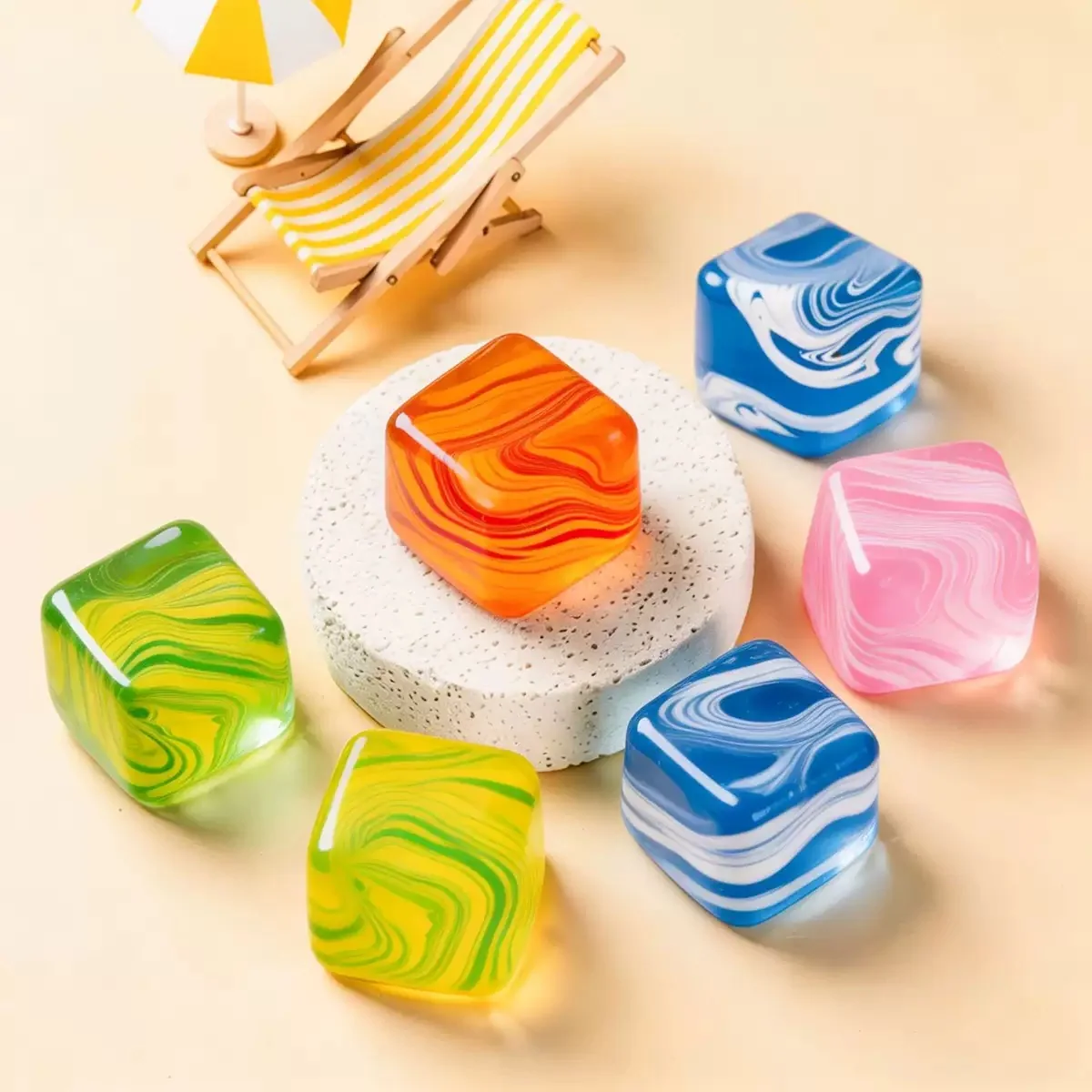
Even the neatest cardstock cube crinkles during study calls and flattens after heavy daily squeezing. By contrast, a molded Swirl Ice Cube Squishy ($9.99 USD) holds marbled color ribbons inside a glossy translucent shell. It stays quiet on desks and rinses clean under cool tap water. For a deeper comparison, read our DIY paper vs store-bought squishy guide or our jelly cube vs slow-rising foam guide.
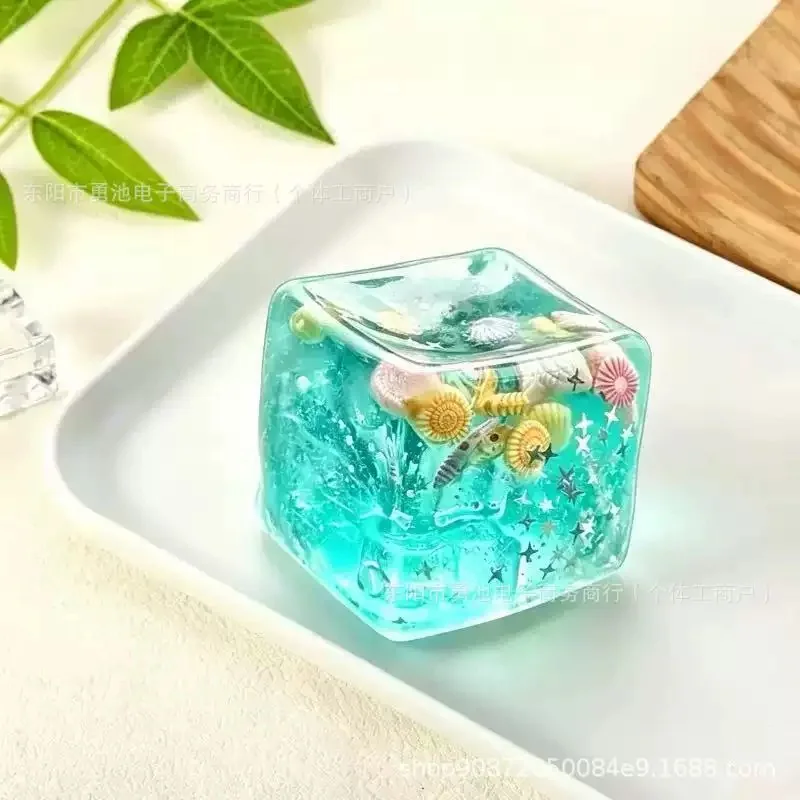
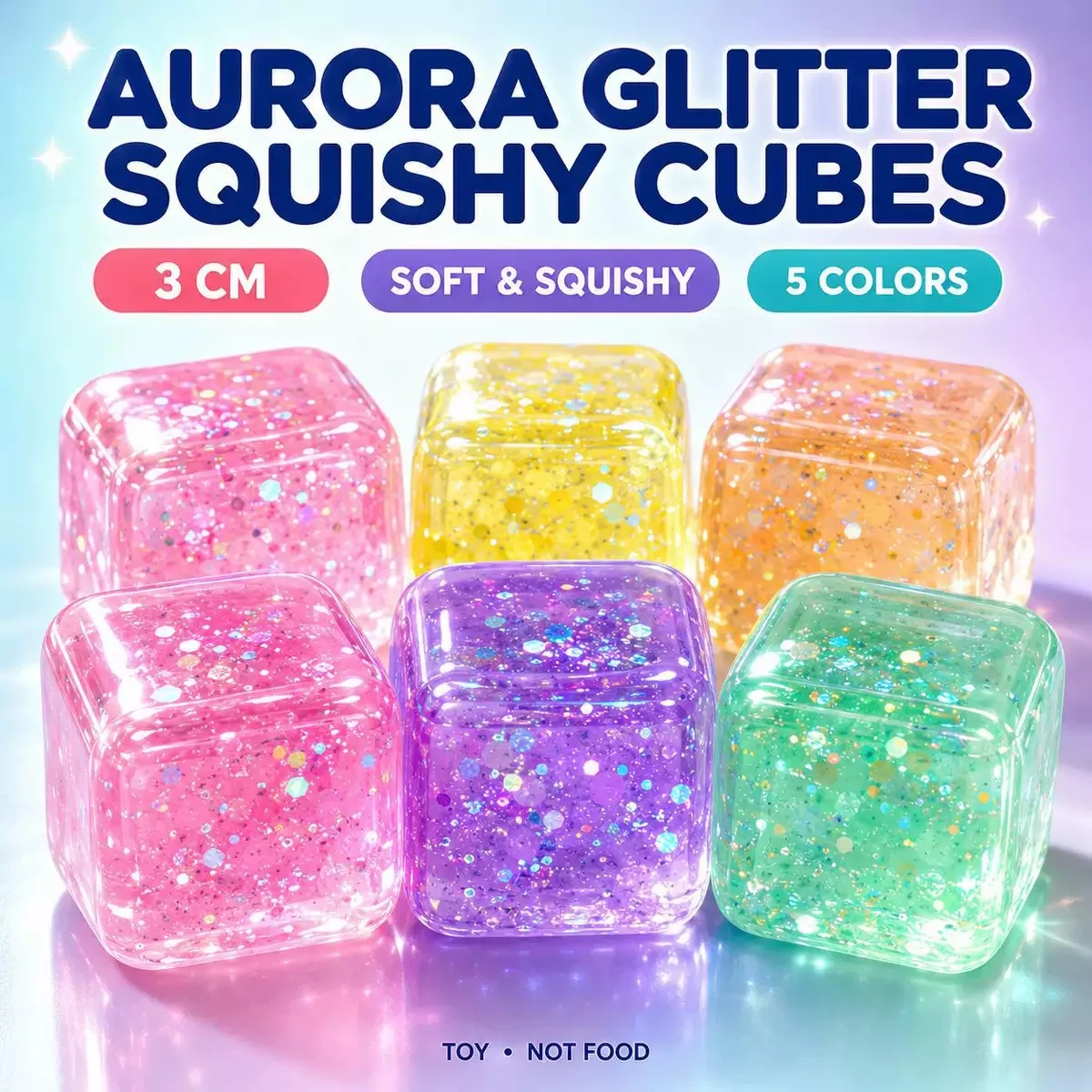
You can also browse our clear aqua Ocean Ice Cube Squishy and compact confetti Glitter Ice Cube Squishy in our Ice Cube Squishy shop, backed by a 30-day return guarantee. Multi-cube orders unlock mix-and-match savings and free standard shipping on larger bundles, giving families a quiet $9.99 desk companion. Every order includes a 30-day return guarantee. Keeping one molded Swirl cube beside your laptop balances weekend crafting with dependable daily focus.
Homemade Ice Cube Squishy Filling Questions Answered
How to make an ice cube squishy at home feel softer without buying craft supplies?
Pull apart clean cotton balls into fluffy layers and mix them at 80% fullness with thin strips of a clean plastic bag. In practice, leaving a tiny air pinhole at one corner keeps the press light and springy.
Do plastic grocery bag fillings make a paper squishy too loud?
Shredded plastic bags do add a crisp crinkle compared to polyester fiberfill. For example, blending mostly fiberfill with a light center core of plastic strips softens both the sound and the rebound speed.
Can you use old socks or fabric scraps to stuff a homemade cube?
In practice, heavy fabric scraps feel dense and lumpy inside paper walls, making the cube stiff. For example, airy fiberfill or fluffed cotton gives far gentler hand comfort. Stick to airy fillings like fiberfill, fluffed cotton, or clean cosmetic sponges for gentle hand comfort.
How long does a foam-free homemade ice cube squishy stay puffy?
In practice, a taped fiberfill cube at 80% fill stays puffy for days before paper creases soften. By contrast, a $9.99 molded clear cube lasts for months. When you want months of washable desk bounce, a molded translucent cube holds up far longer.